

Conviction Without Capital Is Just an Opinion
By Mahesh Murthy·Founder, Pinstorm·Published 12 March 2026 · Updated 9 July 2026
The short answer
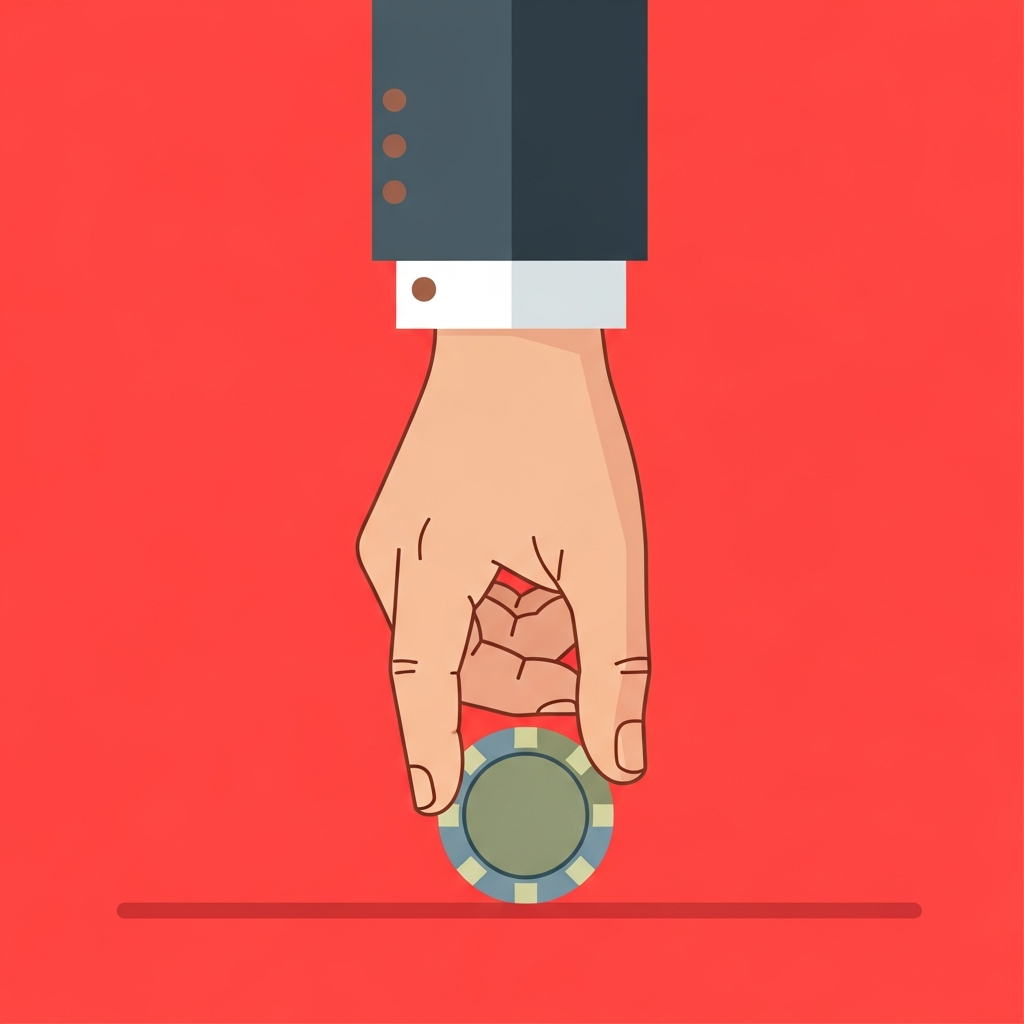
Somewhere around 2005, in a conference room in Mumbai with air-conditioning that worked in bursts, a prospective client asked me a question I've never forgotten: 'If you're so sure this will work, why am I the only one taking the risk?' I didn't have a good answer. The honest answer — the industry's answer — was 'because that's how agencies work.' The client pays. The agency opines. If the campaign works, the agency takes the credit. If it doesn't, the agency takes the retainer anyway and writes a learnings deck. I remember thinking: this is not a business. This is a séance with invoicing.
That question is, more or less, why Pinstorm works the way it does.
An opinion is what you have when nothing happens to you if you're wrong. A conviction is what you have when something does. The marketing industry runs almost entirely on opinions dressed up as convictions. Strategy decks with forty slides of certainty, presented by people whose income is identical whether the strategy soars or sinks. The confidence in the room is real. The exposure is zero. And exposure — not confidence — is the only honest signal in this business.
Think about how this works everywhere else. A chef who won't eat at his own restaurant is telling you something. A fund manager with none of her own money in the fund is telling you something. Nassim Taleb built an entire book around this idea — skin in the game — and the core of it is brutally simple: don't ask people what they believe, ask what they've risked. Belief is cheap. Risk is information.
Now apply that test to the agency pitch you sat through last quarter. The one where they told you, with tremendous certainty, that this positioning, this campaign, this media plan would transform your numbers. Ask the question the Mumbai client asked me: if you're so sure, what happens to you if you're wrong? In almost every case the answer is: nothing. The retainer continues. The hours get billed. The learnings deck gets written. They were never sure. They were selling sure.
So here is what we did about it, and I want to be precise, because this is a place where agencies love to be vague.
Pinstorm prices on outcomes. Not hours, not deliverables, not effort — outcomes. That alone puts our income at risk on every engagement, because if your revenue doesn't move, ours doesn't either. That is the baseline, and it is not negotiable.
Beyond that baseline, we decide — engagement by engagement — how much further to go. On some engagements we invest our own team's time ahead of any payment, doing the strategy and build work at our cost because we believe the outcome will pay for it. On some, where the case is compelling enough, we've gone further and deployed our own money on the media itself — our capital buying the ads, not yours. We have done both. We don't do either automatically, and anyone who tells you they always do is either lying or about to go broke. Conviction is not a policy. Conviction is a judgment you make about a specific business, with a specific product, at a specific moment — and then back with something you can lose.
This is also why we say no a lot. People sometimes hear 'skin in the game' and assume it means we'll gamble on anything. The opposite is true. When your own resources ride on the result, you become extremely picky about which results you believe in. We look for businesses with a clear, direct path to real revenue — not a story about revenue, a path to it. If we can't see that path, we decline, politely, and everyone saves eighteen months. The willingness to walk away is part of the signal. A gambler bets on everything. An investor bets on almost nothing.
There's a second-order effect here that took me years to fully appreciate. When the agency has something to lose, the quality of the arguments changes. In a retainer relationship, the agency's private incentive is to agree with the client — the client pays the bills, and disagreement is friction. In an outcome relationship, agreeing with a bad idea costs us money. So we argue. We push back on the brief. We kill our own creative when the data says it isn't working, rather than defending it through three more quarters because it won an award somewhere. The client stops getting a vendor and starts getting a partner with a genuine, financial reason to be right rather than agreeable. I have had clients tell me the arguments were worth more than the campaigns. I choose to take that as a compliment.
The objection I hear most often — usually from other agency people, over drinks, in tones of wounded professionalism — is that this model is 'unfair' because marketing outcomes depend on things the agency doesn't control. The product. The pricing. The sales team. The market. And that's true. It is also true for every founder, every investor, and every operator on the planet, all of whom manage to function while exposed to things they don't control. The demand for a risk-free income in a results business is not professionalism. It's a request to be paid like a partner while being exposed like a spectator.
Does this mean agencies that don't put resources at risk are all frauds? No. Some do honest work at honest rates. But understand what you're buying from them: an opinion. Possibly a very good opinion, from smart people with real experience. Just be clear that when things go wrong, the entire cost of being wrong lands on you. Their certainty in the pitch meeting was rented, not owned.
So here's the test, and it's the same one that Mumbai client gave me twenty years ago. Next time an agency tells you they believe in the plan, ask them what they're prepared to lose if it fails. Watch the face. The ones who flinch have given you an opinion. The ones who answer have given you a signal. In a business drowning in confident noise, that signal is the only thing worth paying for.
Want to understand the model behind these beliefs? Read: What is outcome-based marketing?